Guide · artwork & materials
Mesh or PVC banner?
PVC for most things. Mesh the moment wind is involved — a solid banner on an exposed fence becomes a sail, and sails tear or take the fence with them.
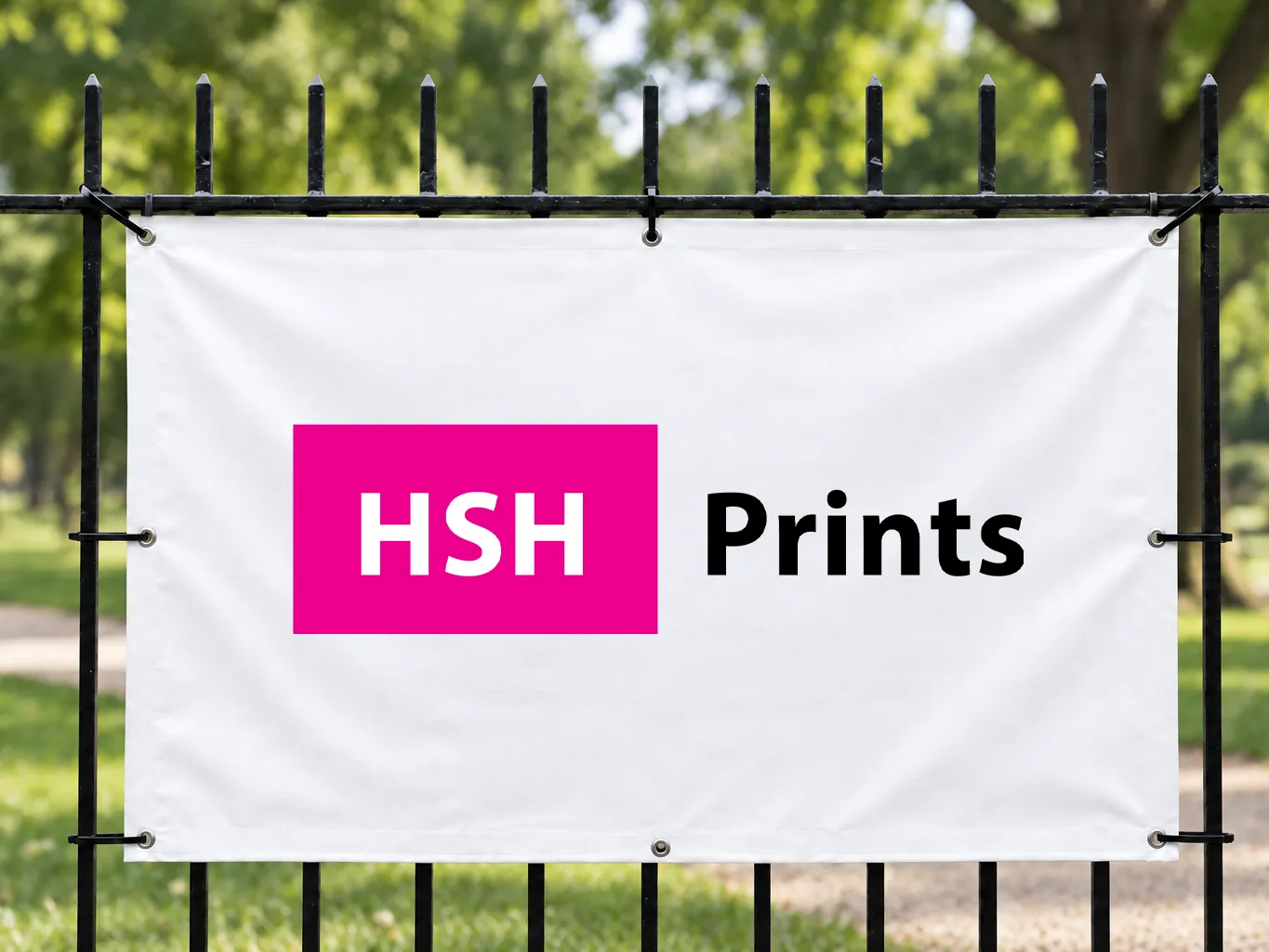
PVC
Solid coated vinyl, typically 440 to 510gsm. Opaque, saturated colour, and the standard choice. Hemmed and eyeletted it will last several years outdoors.
Use it for shop fronts, indoor events, sponsor boards, anything on a wall or in a frame where wind cannot get behind it.
What we print for this
Proofed before they run
Mesh
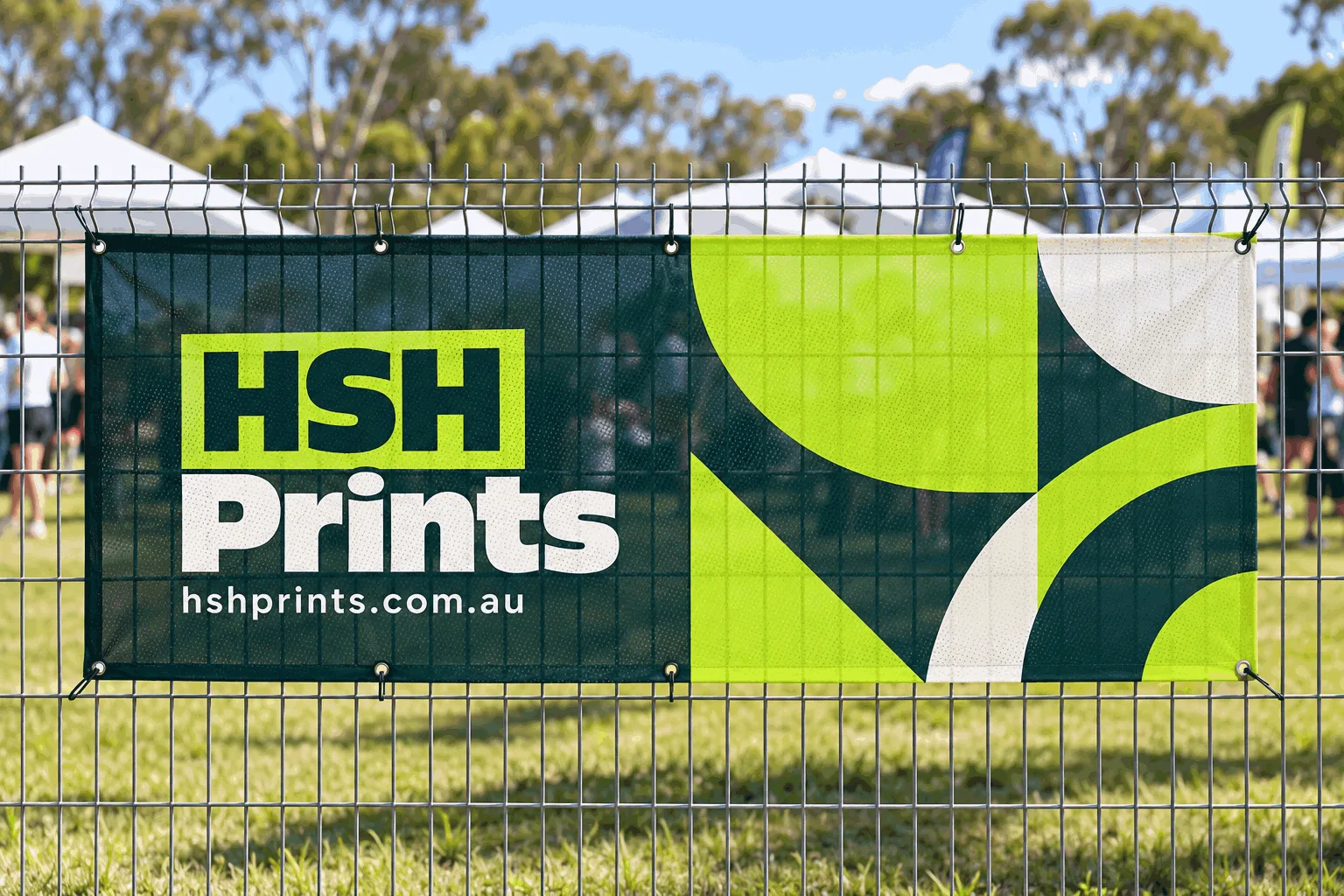
Perforated vinyl, roughly 270 to 370gsm, with small holes across the whole surface that let air pass through. Typically 60–70% of the surface is material and the rest is hole, which cuts wind load dramatically.
Use it for construction hoarding, scaffold wraps, fence banners, stadium and roadside work — anywhere exposed.
The trade-off is opacity. Mesh is see-through to a degree and colours read slightly lighter, because some of what you are looking at is the background behind the holes. Fine detail and small text suffer.
Wind is the thing that destroys banners, not rain or sun. A 3 × 1m solid PVC banner on an exposed fence catches an enormous amount of force in a gust. It will tear at the eyelets, or it will stay intact and pull the fence over. If it is outdoors and unsheltered, use mesh.
Finishing: how it is held up matters
- Hemming — the edge folded and welded back on itself. Not optional outdoors; an unhemmed edge frays within weeks.
- Eyelets — metal rings, normally every 500mm to a metre. Closer spacing spreads the load. Corners always get one.
- Rope hem — rope welded into the edge for large banners under tension. Much stronger than eyelets alone.
- Pole pockets — a sleeve at top and bottom for a pole to slide through, for hanging banners.
Artwork
- 150dpi at final size is plenty; these are read from metres away.
- Keep artwork clear of the eyelets. Allow 50mm from every edge for hemming and fixings.
- Design for the distance. A banner read from ten metres needs a headline and little else — see sign sizes.
- Avoid fine detail on mesh. The perforation eats it.
Common questions
Should I use a mesh or PVC banner?
Use mesh the moment the banner is outdoors and unsheltered, and PVC for anything indoors, on a wall, or in a frame. PVC is solid coated vinyl at 440 to 510gsm: opaque, saturated, and the standard choice. Mesh is perforated at 270 to 370gsm, with roughly 60–70% material and the rest hole, which cuts wind load dramatically.
Why do outdoor banners tear?
Wind is what destroys banners, not rain or sun. A 3 × 1m solid PVC banner on an exposed fence catches an enormous amount of force in a gust. It will either tear at the eyelets or stay intact and pull the fence over. Mesh lets the air through, at the cost of some opacity and fine detail.
How much does a vinyl banner cost?
Vinyl banners are priced by area at $74.50 a square metre ($135 at the least), delivered and including GST: 2000 × 1000mm $149, 3000 × 1000mm $223.50 and 4000 × 1000mm $298 — PVC 610gsm blockout, hemmed with eyelets, any size up to 2000 × 5000mm. Mesh is quoted. Turnaround is 2-4 working days from payment, delivered Australia-wide (allow 1 to 2 working days longer outside NSW, QLD and VIC).
How far apart should banner eyelets be?
Eyelets go every 500mm as standard, with one in each corner. Closer spacing spreads the load, which is what matters on anything large or exposed. Hemming — the edge folded and welded back on itself — is not optional outdoors: an unhemmed edge frays within weeks.
What is a rope hem, and when do I need one?
A rope hem is rope welded into the edge of the banner, and it is much stronger than eyelets alone for large banners under tension. Our three standard banner sizes have one top and bottom as standard; rope all round is quoted. Pole pockets are the other option — a sleeve top and bottom for a pole to slide through — for banners that hang rather than being tied off.
How much clearance do I need around banner artwork?
Keep everything important 50mm clear of every edge. The hem folds material back on itself and the eyelets punch through that fold, so artwork at the edge either disappears into the hem or gets a hole in it. Supply at 150dpi at final size, and avoid fine detail on mesh because the perforation eats it.
Next
Last updated .