Guide · artwork & materials
What GSM should business cards be?
Quick answer: 350gsm for a normal business card, 400–450gsm for a heavy one, 150gsm for a flyer. A standard Australian card is 90 × 55 mm with 3 mm bleed.
350gsm is the sensible default and what most people mean by a normal business card. 400gsm and up is where a card starts to feel deliberately expensive.
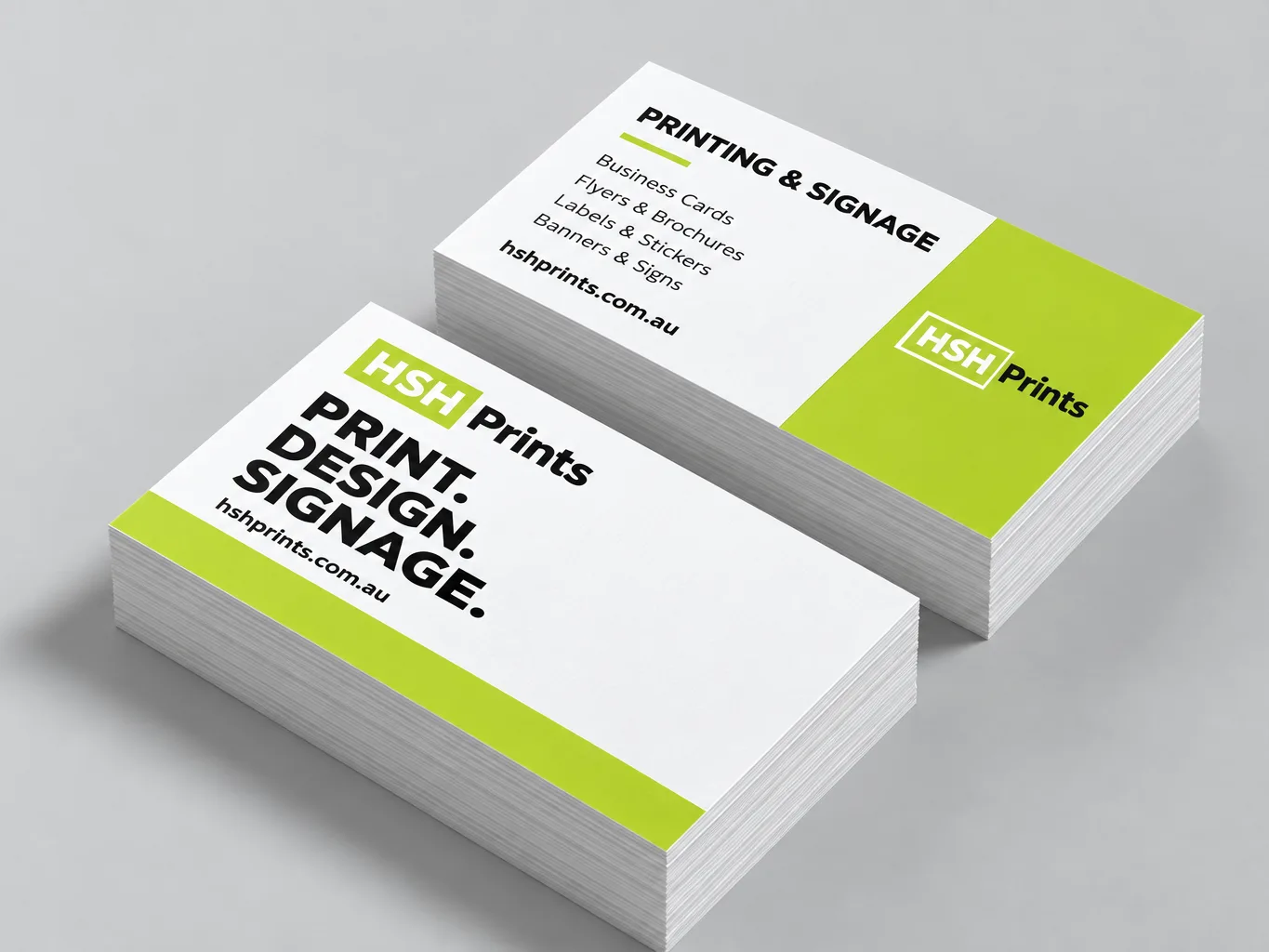
Ours: business cards on 350gsm, matt laminated both sides, 250 from $79, delivered; premium cards on 450gsm with soft-touch lamination, 250 from $154, delivered.
What GSM measures
Grams per square metre — the weight of one square metre of the stock. It is a measure of weight rather than thickness, which is why two papers at the same GSM can feel quite different: an uncoated stock is bulkier and softer than a coated one at the same weight.
It is still the most useful single number, because within a family of similar papers, heavier means thicker and stiffer.
What we print for this
Proofed before they run
What each weight is for
| GSM | Feels like | Used for |
|---|---|---|
| 80–100 | Office paper | Letterheads, compliment slips, internal documents |
| 130–170 | A good magazine page | Flyers, brochure inners, leaflets |
| 250–300 | A thin postcard | Brochure covers, menus, budget cards |
| 350 | A proper business card | The default |
| 400–450 | Noticeably substantial | Cards that are meant to feel expensive |
| 600+ | Card you could cut yourself on | Duplexed and triplexed premium cards |
The jump from 350 to 400gsm is the best value upgrade in print. It costs very little on a run of 500 and it is the difference people actually register when they take a card — far more than a finish they will never consciously notice.
Coated, uncoated and soft-touch
- Matt coated — smooth, low sheen, easy to read. The safe default for almost anything.
- Gloss coated — sharp, saturated colour, and photographs look their best. Reflective under lights and it shows fingerprints.
- Uncoated — no surface coating, so ink sinks slightly and colours look softer. Warm, tactile, and the only option if anyone needs to write on it.
- Soft-touch laminate — a coating with a velvety, almost suede feel. It is the finish people pick up and comment on, and it is what most "premium" cards are.
Note that laminate adds thickness on top of the stock, so a 400gsm soft-touch card is thicker than 400gsm alone. See the finishes guide for how they compare.
Practical warnings
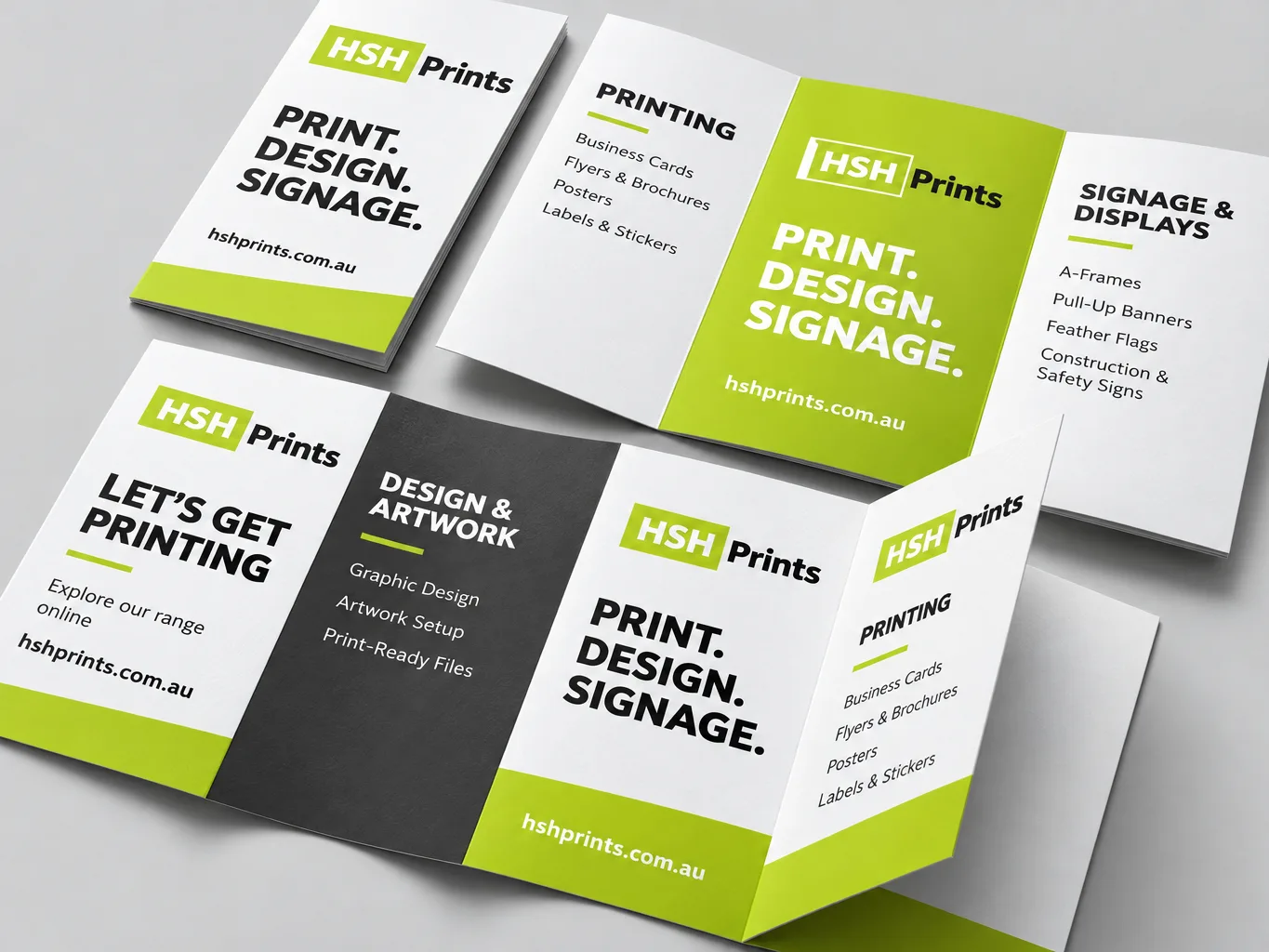
- Folding heavy stock cracks it unless it is scored first. Anything above about 170gsm that folds must be creased, and we do that as a matter of course.
- Uncoated shows colour differently. The same file prints noticeably lighter and softer on uncoated than on coated. See CMYK against RGB.
- Heavier is not automatically better. A 400gsm flyer is an odd object — the weight signals "keep this", and a flyer is meant to be disposable.
Common questions
What GSM should business cards be?
350gsm is the standard business card weight and what most people mean by a normal card; 400gsm and above is where a card starts to feel deliberately expensive. 500 business cards on 350gsm matt are $119 including GST. For 450gsm uncoated with velvet soft-touch lamination, see premium business cards, which are $236.50 for 500.
What does GSM actually measure?
GSM is grams per square metre — the weight of one square metre of the stock, not its thickness. That is why two papers at the same GSM can feel quite different: an uncoated stock is bulkier and softer than a coated one at the same weight. It is still the most useful single number, because within a family of similar papers heavier means thicker and stiffer.
What GSM should a flyer be?
150gsm is the standard flyer weight and the default here, with 115gsm below it and 250gsm gloss and 300gsm above. Each weight is priced as its own list rather than as a surcharge on 150gsm, because the press charges for them that way — 115gsm is the odd one, costing more than 150gsm rather than less: it is a specialty sheet bought in small quantities rather than by the pallet, and 150gsm is the weight the whole trade buys in volume. Heavier is not automatically better: a 400gsm flyer is an odd object, because the weight signals "keep this" and a flyer is meant to be disposable.
Is 400gsm worth it over 350gsm for a business card?
Yes on most jobs. It is the difference people actually register when they take the card, far more than a finish they will never consciously notice. Premium business cards go further again at 450gsm uncoated, $236.50 for 500 against $119 for 500 standard 350gsm. Laminate sits on top of the stock, so the velvet lamination included on those finishes thicker than 450gsm alone.
Will heavy stock crack when it folds?
Not if it is scored first — any stock above about 170gsm has to be creased before it folds, or it cracks. Unscored heavy stock cracks along the fold and shows the white core underneath. Every brochure is scored before folding as a matter of course rather than as a paid extra.
What is the difference between coated, uncoated and soft-touch stock?
Coated stock has a surface layer that holds ink on top so colours look sharp; uncoated has none, so ink sinks in slightly and colours look softer; soft-touch is a laminate over the top with a velvety, almost suede feel. Matt coated is the safe default for almost anything. Gloss makes photographs look their best but shows fingerprints. Uncoated is the only option if anyone needs to write on it.
Next
The finish, too
After the weight comes the coating
Last updated .