Guide · signage rules
Construction site signs in NSW and Queensland
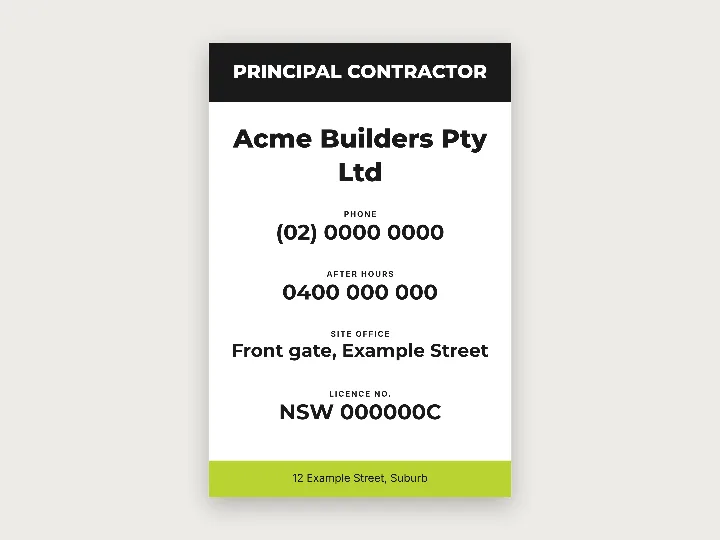
On a construction project worth $250,000 or more, the principal contractor must put up a sign showing its name, its phone numbers including an after-hours number, and where the site office is, visible from outside the site. That is the whole rule, it is the same in both states, and it is the one sign a site inspector looks for first. Here is what it says, where it comes from, and what else usually goes on the fence beside it.
Last reviewed September 2026. This is the regulation read plainly, not legal advice — confirm anything you are relying on with SafeWork NSW or Workplace Health and Safety Queensland, and the licence-number rules with NSW Fair Trading or the QBCC.
Who has to display it
The principal contractor for a construction project. Both terms are defined in the Work Health and Safety Regulation of each state. A construction project is construction work that costs $250,000 or more; the principal contractor is the person conducting a business or undertaking that commissions the work, or the one it has appointed to have management or control of the workplace — in practice, the head builder. A $180,000 renovation has no principal contractor in this sense and no duty to display the sign, though most builders put one up anyway because it is also the cheapest advertising on the street.
What we print for this
Proofed before they run
Start from a free design
Construction site signs · edit it online
What the sign has to show
Clause 308 of the NSW Work Health and Safety Regulation 2017 and section 308 of the Queensland Work Health and Safety Regulation 2011 are the same words. The principal contractor must ensure signs are installed that:
- show the principal contractor’s name and telephone contact numbers, including an after-hours number;
- show the location of the site office for the project, if there is one; and
- are clearly visible from outside the workplace, or from outside the work area where the project is being undertaken.
Nothing about size, colour, material or typeface. A sign that says those things and can be read from the footpath complies; a sign that is beautiful and omits the after-hours number does not. The after-hours number is the one most often missing, because it is the one nobody wants to give out.
What happens without one
It is an offence under the regulation, with a maximum penalty set in penalty units: the Housing Industry Association’s summary of the NSW clause quotes $4,400 for an individual and $23,100 for a body corporate. More to the point, it is the first thing an inspector checks on arrival, and an inspection that opens with a missing sign does not get easier from there.
Licence numbers
Separate from the WHS rule. In New South Wales, a contractor doing residential building work must show its contractor licence number on advertising, and NSW Fair Trading treats a sign at the site as advertising. In Queensland, the QBCC requires a licensee to show its licence number on site signage. Neither is part of clause 308, which is why the principal contractor sign has a licence number field rather than requiring one — fill it in if the work is licensed. Check the licence-number rule for your own class of work with NSW Fair Trading or the QBCC; it is the one part of this page that varies by what you are building.
Size and placement
The regulation says clearly visible from outside and no more. 600 × 900mm on the fence is the standard and is legible from the footpath; on a main road, where the sign is read from a car, 1200 × 900mm. The rule of thumb is 10mm of letter height for every 3 metres of viewing distance — the table is here. Put it beside the site entry, at eye height, on the street frontage, and not behind the skip bin.
Corflute lasts six to eighteen months outside, which covers most residential jobs; a two-year commercial project is better on ACM — corflute against ACM explains the trade.
What else goes on the fence
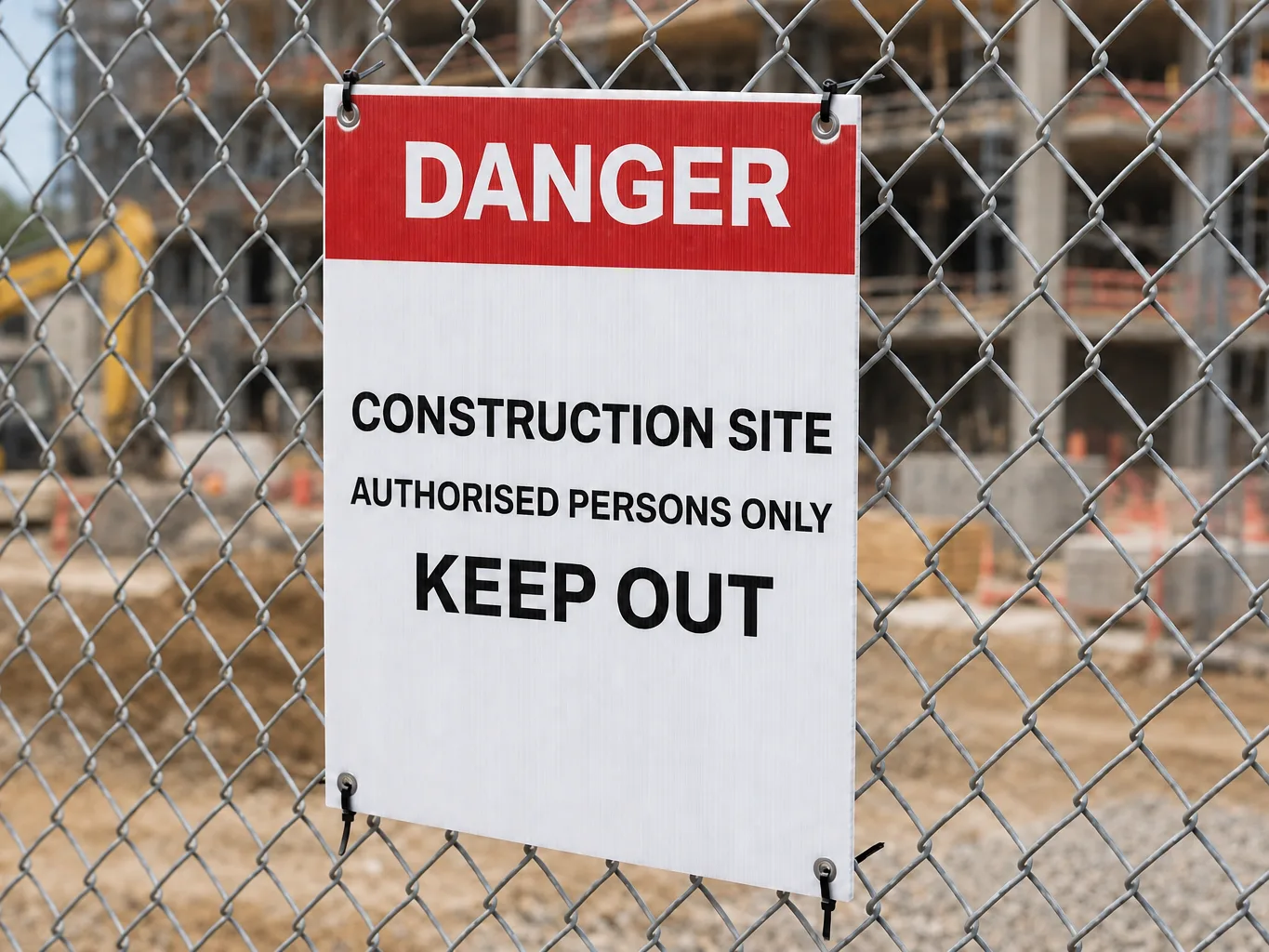
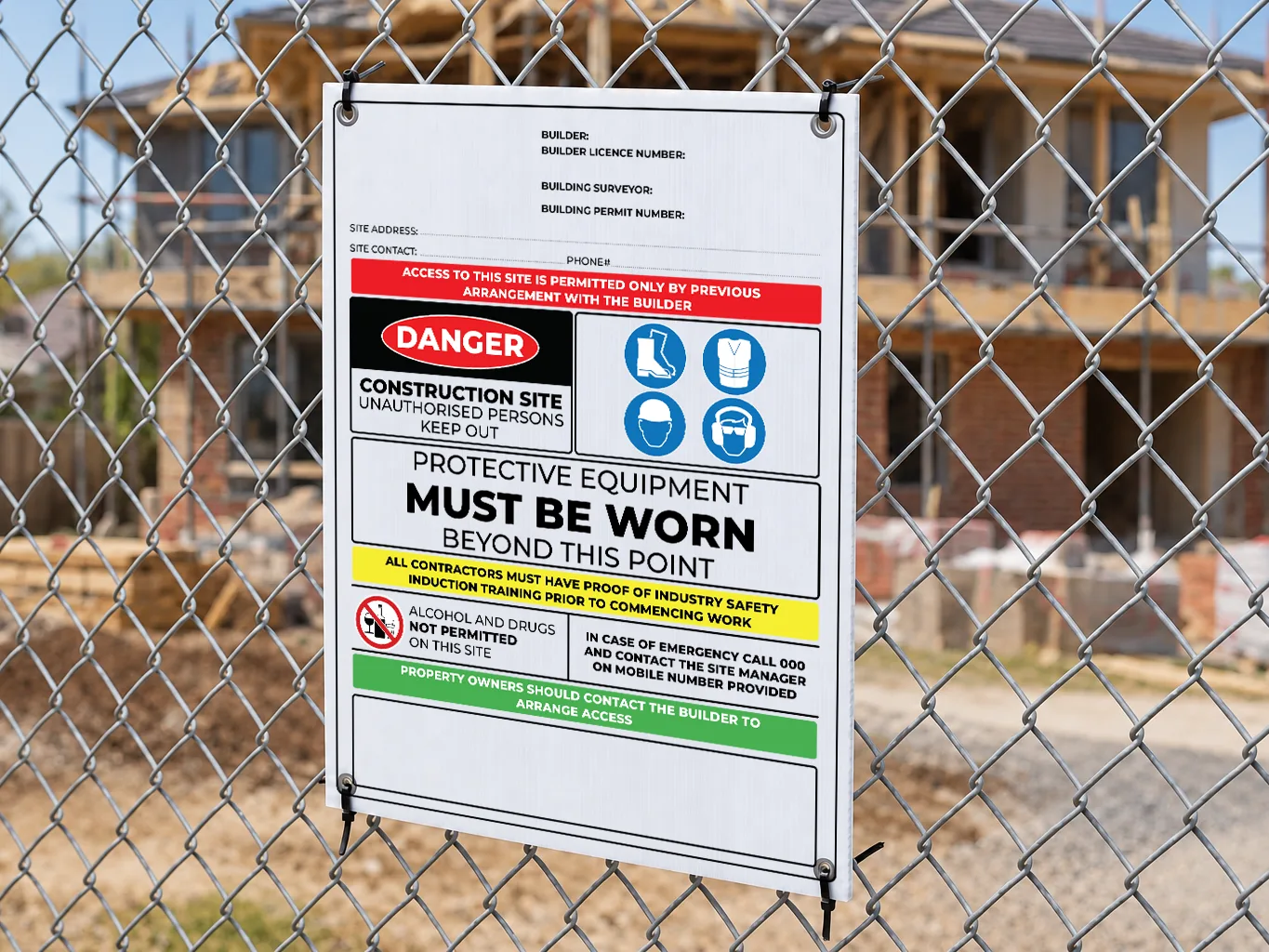
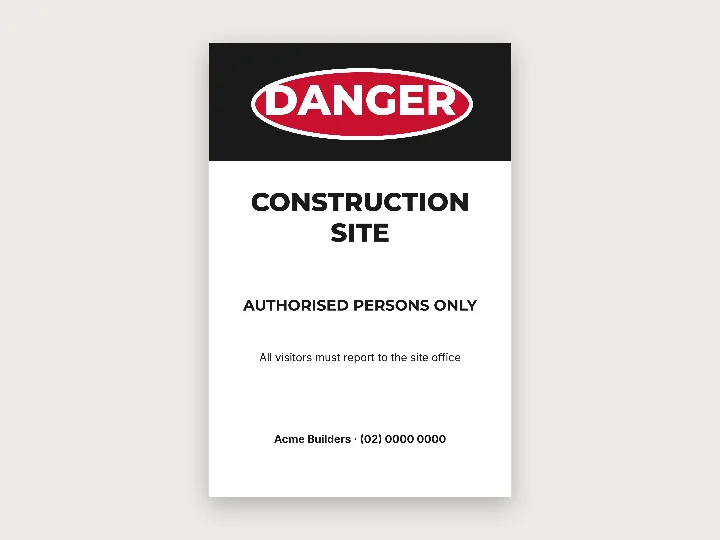
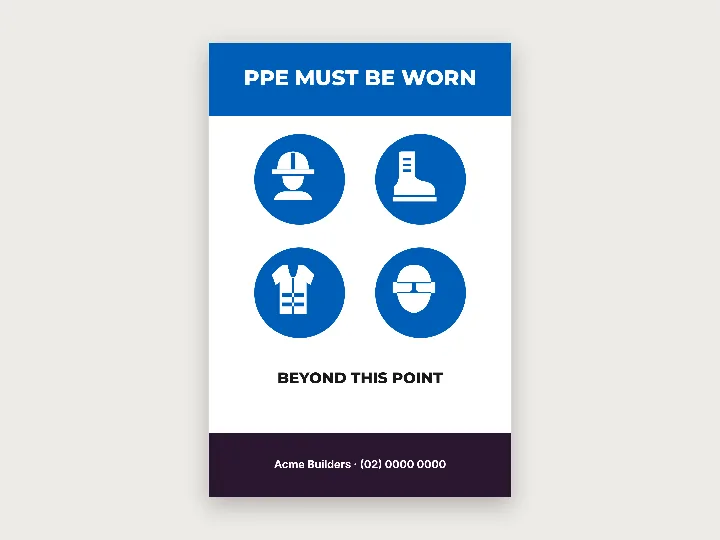
The principal contractor sign is the one the regulation names. The rest come from the site’s own safety management plan, and a plan will normally call for a site entry sign (DANGER · construction site · authorised persons only), a PPE sign at the point beyond which hard hats, hi-vis and boots are required, and a visitors sign directing anyone else to the site office. They are drawn to the AS 1319 shapes and colours — red for danger, blue for a mandatory instruction — and the wording on a safety sign is yours to specify from your plan, not ours to invent.
Getting the sign
On the construction site signs page, choose the sign, type the company name and the numbers, and the words set themselves in the preview. There is no artwork to upload and no designer to brief; you approve a proof before it prints, and it is couriered to a NSW or Queensland site in 2-4 working days from payment. Five 600 × 900mm signs are $160 including GST and delivery.
Related
Last updated .