NSW and QLD · orientation, not legal advice
Does your sign need council approval?
Often, yes. Signage fixed to a building is usually regulated, and so is anything you put on a footpath. The rules differ by council, by zone and by what the sign actually is — so the honest answer is always check with your council before you order. This page tells you what to check and what to have ready.
In one paragraph
In NSW a sign on a business premises can be exempt development — no council approval — if it meets the standards the state policy sets for its type. The NSW Planning Portal lists them: building identification, wall, fascia, under-awning, top hamper and window signs, replacement identification signs, real estate, temporary event and election signs, each with its own conditions. Every exempt sign also needs the landowner’s written consent, and one that projects over a road or footpath needs approval under the Roads Act as well. Outside those standards it is a development application to your council.
Rules change and this page is general orientation only — confirm with your council before you order anything.
Last reviewed September 2026.
Ordering a sign? Shopfront signage starts with a site measure, with council approval settled before anything is made. Temporary signs — real estate, election, event — are corflute signs, 5 from $128, delivered.
Why this matters before you order, not after
A sign is made to your measurements. If it turns out you cannot display it — because it is too large for what your zone permits, because it is illuminated and yours is not allowed to be, or because your landlord or the building's strata will not have it — you own a custom-made object you cannot use.
Approval also has its own timeline, and it is usually longer than fabrication. Councils work in weeks, not days. Finding out you need consent after the sign is built is how a two-week job becomes a three-month one.
The signs this applies to
Made in NSW, proofed before they run

The rough shape of it
Both New South Wales and Queensland regulate business signage, and in both states it is administered locally — your council is the authority that matters, and neighbouring councils genuinely differ. Broadly:
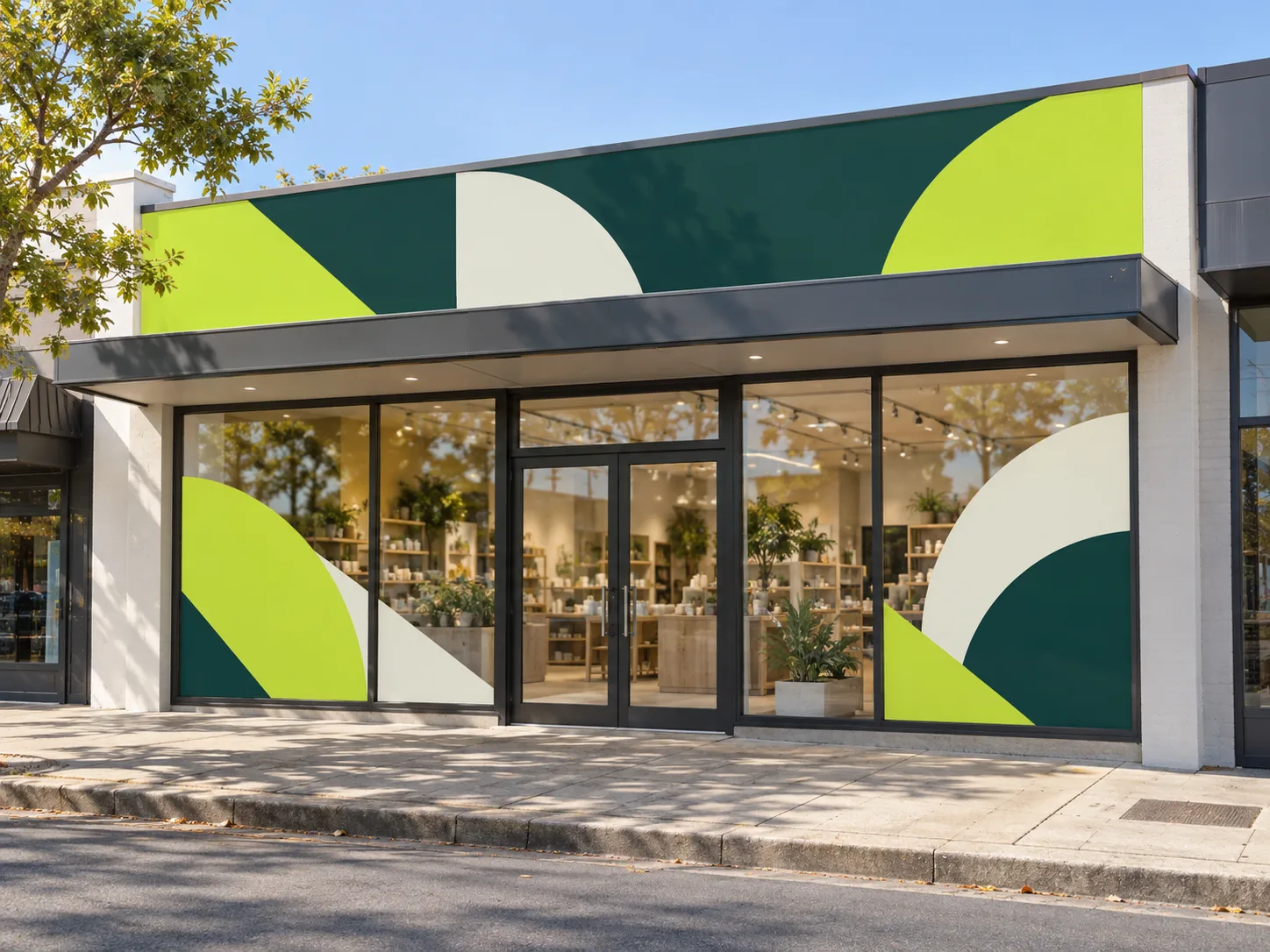
- Signs fixed to a building — fascia signs, pylon signs, projecting signs, illuminated boxes, fabricated letters — are generally the most regulated, and the most likely to need consent.
- Illumination changes the answer. A lit sign is treated differently from an unlit one almost everywhere, and moving or flashing displays are more restricted again.
- Footpath signs — A-frames outside your shop — are usually regulated separately, because they sit on public land. Many councils require a permit and set rules about width, placement and leaving clear passage.
- Some smaller, unlit signage is exempt in both states under state-level codes, but the exemptions depend on size, position, zone and illumination — which is precisely why nobody can tell you over the phone whether yours qualifies.
- Heritage items and conservation areas are tighter, and often remove exemptions that would otherwise apply.
We are a print and signage supplier, not a planning consultant. Nothing here is legal or planning advice, and none of it overrides what your council tells you. Treat this as the list of questions to ask, not as the answer.
What to ask your council
Ten minutes, before you spend anything
Search your council's website for "signage" or "advertising" and look for a development control plan, or call their duty planner — most councils have one, and the call is free. Have these ready:
- The address and what the property is zoned.
- What the sign is — fascia panel, fabricated letters, window graphics, pylon, A-frame.
- Its dimensions and total area, and how high off the ground it sits.
- Whether it is illuminated, and if so how.
- Whether the building is heritage listed or in a conservation area.
- How many signs are already on the premises — limits are often cumulative.
Ask them directly: "Is this exempt development, or do I need consent?" That is the question that determines everything else. Write down who you spoke to and when.
Two approvals people forget
Your landlord or strata. Council consent is not permission from the building owner. Most commercial leases require written approval before you fix anything to the structure, and strata schemes commonly have their own rules about the common property your sign is bolted to. Get it in writing.
An electrician, for anything illuminated. A lit sign needs a licensed electrician to connect it, and that is a separate trade from the people who fabricate and install it. Factor in both the cost and the scheduling.
What we can do
Once you know what you are allowed to display, we make it. If you are preparing an application, we can supply what councils usually want to see: dimensioned drawings, a scaled elevation showing the sign on the building, and the materials and finishes. Ask when you book your site measure, and we will produce them as part of the quote.
The add dimensions to a photo tool is free and often enough on its own for an early conversation with a planner — photograph the shopfront, draw the proposed sign on it with real measurements, and you have something concrete to ask about.
If a sign turns out to need consent, that timeline runs alongside ours rather than after it. Tell us at the site measure and we will schedule fabrication around it instead of finishing early and storing your sign.
Your council, specifically
The rules are administered locally — start with yours
City of Sydney
The CBD and inner ring — heritage-dense, footpaths closely managed.
City of Parramatta
New towers next to colonial heritage; the answer moves street by street.
Blacktown
Town centres, industrial estates and the Marsden Park growth corridor.
Newcastle
The heritage East End changes what the same sign is allowed to be.
Wollongong
Crown Street to the village main streets, under one set of rules.
Common questions
What people ask before they order
When does a sign approval take effect, and how long does it last?
An approval takes effect from the date on the council’s decision notice, and it comes with conditions, including how long you have to act on it before it lapses. That period is written on the notice itself, so read it before you order. If you are close to the end of it, or the sign you want has changed from the one approved, ask the council whether the approval still stands.
Do I need approval to change the wording or the business name on an existing sign?
It depends on what was approved. If the approval names the wording or the business, or the sign was approved as one specific design, changing it can need the council’s agreement. A like-for-like change in the same position and size, to a sign that never needed approval, usually does not. There is no single fixed time to wait or to lodge, so ask the council with the address, the existing approval number and the new wording before you order.
Do I need a permit for an A-frame on the footpath?
Usually yes. A footpath is public land managed by the council, so an A-frame outside your shop is normally covered by the council’s own footpath or outdoor-furniture policy and a permit, not by your own planning approval; the permit sets conditions such as size, position and keeping a clear path for pedestrians. Councils differ in the detail, so search your council’s website for “footpath sign” or “A-frame permit” and apply before the sign goes out.
Does a business sign have to be in English?
We do not know of a state-wide rule in New South Wales that makes a business sign English-only; the planning rules covered on this page are about size, position and illumination, not language. Some council controls and heritage conditions do comment on what a sign says, so if yours carries another language or a translation, mention it when you ask the council.
Can you tell me whether my sign needs approval?
No, and we would not guess: only the council can confirm it for your address and your sign. What we can do is measure on site and draw the sign to scale, so your question to the council has real dimensions in it. See “What we can do” above.
Related
Shopfront signage
Measured on site, then quoted. Fascia, illuminated and 3D letters.
Building something?
A construction site sign is a different rule again — work health and safety, not planning.
How big should it be?
Letter height against viewing distance, before you ask about limits.
A-frame signs
Footpath signs, which have their own permit rules.
Ordering in Queensland?
QLD runs a different framework — accepted development, not exempt development.
Ordering election signs?
The size limits and the authorisation wording the law requires, separately.
Last updated .