Australia · orientation, not legal advice
Car and ute decals: what is legal where
The paintwork is yours: a decal can go on any door, tailgate, canopy or toolbox in every state. The rules are about what the driver can see through, what a camera has to read, and what the words say. Get those three right and a work ute can carry as much signage as you can fit on it.
In one paragraph
Put decals on the body panels freely. Keep them off the windscreen below the narrow band across the top, and off the front side windows altogether. On the rear side windows and rear window it depends on your mirrors and your state; larger graphics there go on perforated one-way film. Never cover the number plate, the lights or the reflectors. And mind the words: in Queensland a vehicle can lose its registration over advertising found to be offensive.
Rules change and differ between states. This page is general orientation only — check with your state’s transport authority before relying on it.
Last reviewed October 2026.
Ordering decals? Car and ute decals are made to your vehicle and posted flat, ready to apply, and the proof shows exactly where each one sits before anything is cut.
Where a decal can go
Panel by panel
| Where | Decals? | What to know |
|---|---|---|
| Doors, tailgate, canopy, toolbox, bumper | Yes | Anywhere on the body, in every state. Keep clear of lights, reflectors and the plate. |
| Windscreen | Top band only | The strip across the top, roughly the top tenth, above where the wipers sweep. Rego labels, toll tags and permits belong there too. Keep clear of the cameras and sensors mounted behind the glass. |
| Front side windows | No | They must let through at least 35% of light so you can see your side mirrors. A solid sticker lets through none. |
| Rear side windows | Limited | Window film is allowed down to 20% of light let through (15% in the Northern Territory). Small stickers near an edge are generally fine. |
| Rear window | Depends on mirrors | With an external mirror on each side, far more coverage is allowed, and vans and utes built to carry goods get the most leeway. Larger graphics use perforated one-way film. Without both mirrors, keep to small stickers near the edge. |
| Number plate and surround | Never | Nothing on, over or around the characters, and no tinted or reflective covers. |
| Lights and reflectors | Never | Headlights, indicators, brake lights and reflectors stay uncovered, including by tinted film. |
What we print for this
Proofed before they run
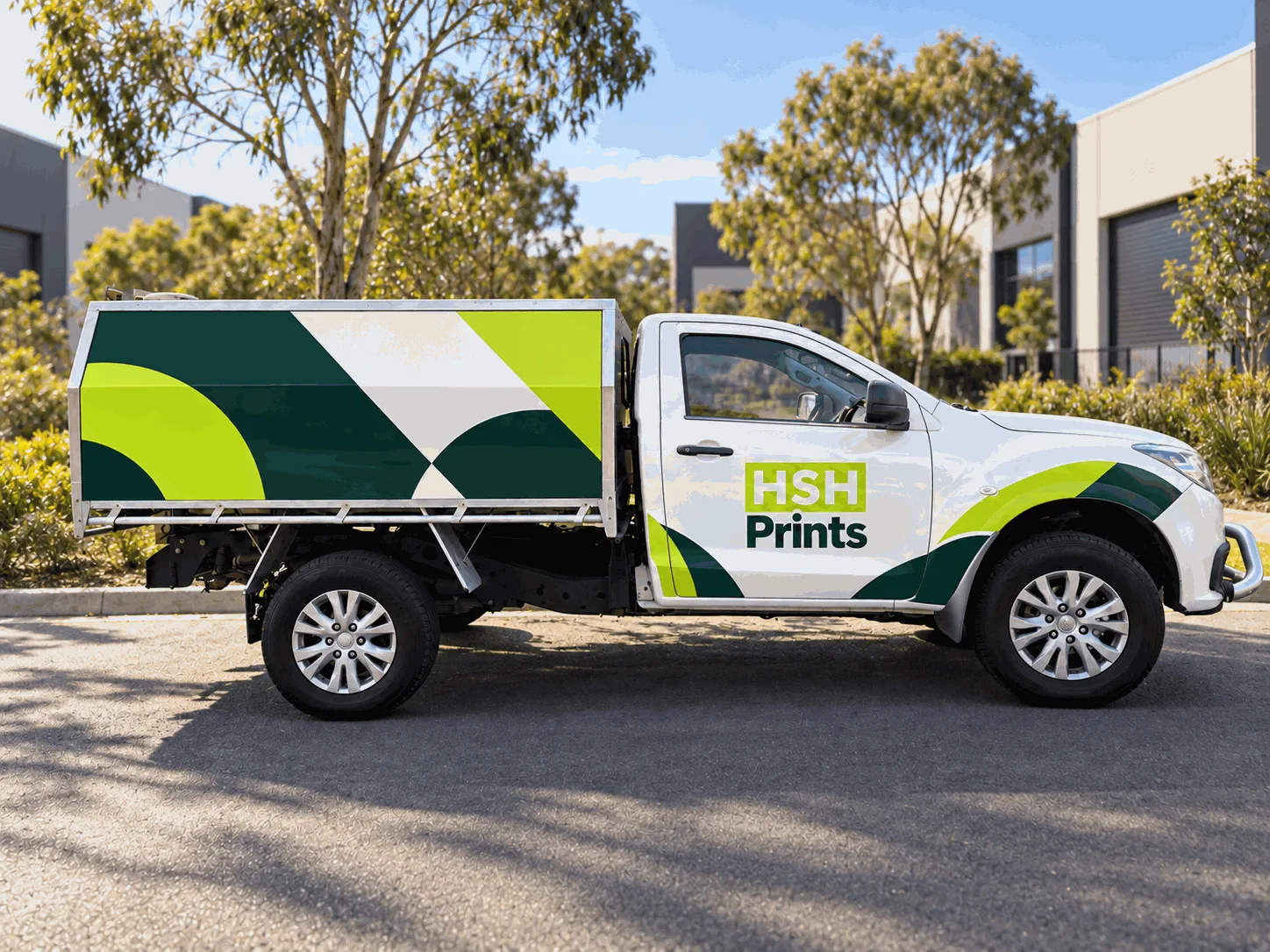
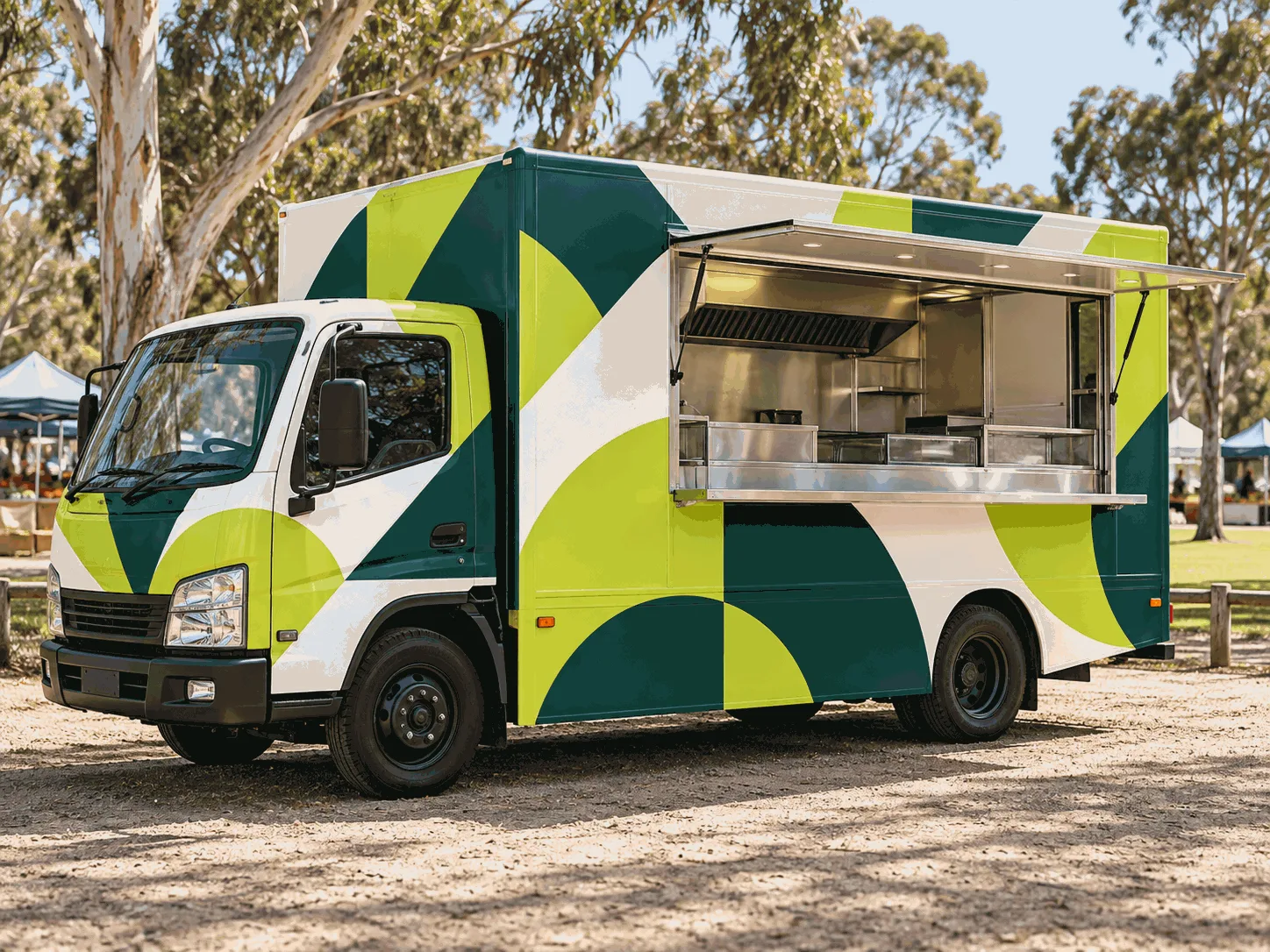
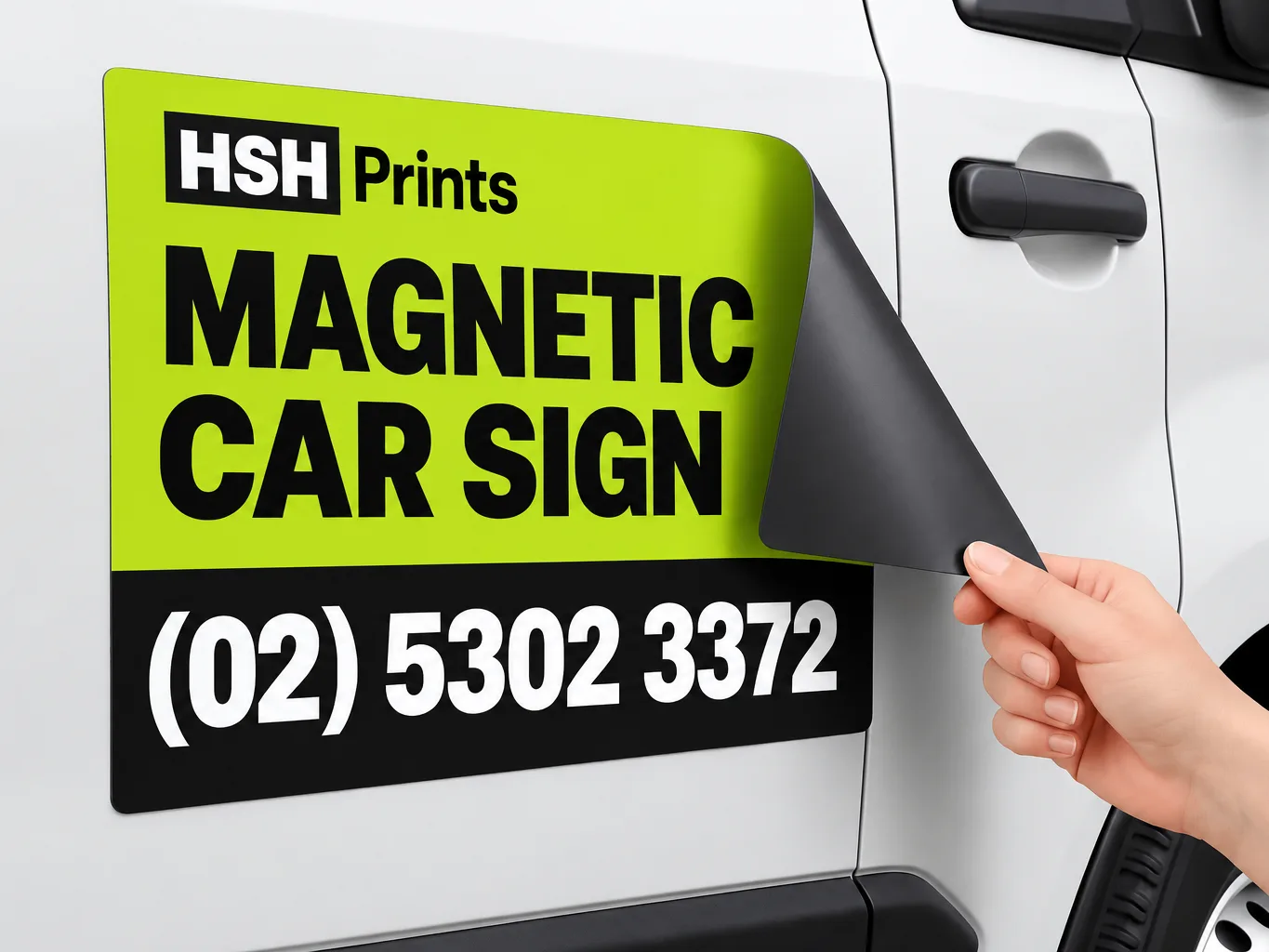
Start from a free design
Magnetic car signs · edit it online

The windscreen
Everything below the top band is the driver’s view of the road, and that is the one area no state will let you cover. The band itself is where the stickers that have to be on the glass go: registration labels in the states that still use them, toll tags, parking and site permits. A business name in the band is generally fine; a business name across the middle of the glass is not.
Newer vehicles mount lane, collision and rain sensors behind the windscreen, near the mirror. A decal over them can switch a safety system off without telling you, so leave that patch clear even inside the band.
Side and rear windows
The national window rules are written for tint, measured as the share of light the glass lets through: at least 35% on the front side windows and 20% on the rear side windows and rear window, with the Northern Territory allowing 15% at the back. An ordinary opaque decal lets through nothing, which is why it cannot go on a front side window at all.
The rear window depends on mirrors. With an external rear-view mirror on both sides, the driver is not relying on the rear window, and states allow much more over it — most of all on goods vehicles like utes and vans. That is where perforated one-way vision film comes in: printed on the outside, see-through from the inside, so the back glass can carry a full graphic. Check your state’s limits for your type of vehicle before covering a whole rear window, and keep any film off the area the third brake light shines through.
Number plates, lights and reflectors
Obscuring a number plate is an offence in every state and territory, and it carries fines and demerit points. That covers stickers on the plate, frames or surrounds that cut into the characters, and tinted or reflective covers. Traffic and toll cameras have to read the plate from an angle, so even a slim border can be enough. Put the logo on the bumper or the tailgate instead.
The same goes for anything that changes what your lights look like. Decals and film stay off headlights, indicators, brake lights and reflectors. A covered light is also an easy fail at a roadworthy or rego inspection.
What the words can say
In Queensland, advertising on a registered vehicle can cost the vehicle its registration. If Ad Standards finds a slogan or image breaches the advertising code and it is not changed or removed, the Department of Transport and Main Roads can give notice and cancel the registration on a date at least 14 days later. The power comes from the 2017 offensive advertising amendment to the Transport Operations (Road Use Management) Act.
Everywhere else, advertising on vehicles is still advertising: anyone can complain to Ad Standards about it. And in every state, steer well clear of anything that makes a vehicle look like police, ambulance or fire: their chequered patterns, their words, and graphics of red and blue lights.
Does a work ute need signage?
For most businesses, no law says a vehicle must carry your name. One thing to know if you hold a building or trade licence: in NSW and Queensland, licensed builders and tradespeople generally have to show their licence number in their advertising, and signwriting on a work vehicle is advertising. Check what your licensing body expects (NSW Fair Trading or the QBCC) and put the number on with the rest.
Sizes that read from the car behind
- Business name on the doors: 100–150mm tall letters, the largest thing on the panel.
- Phone number on the tailgate: 75–100mm tall. The driver behind you at the lights is the one person with time to read it.
- Website and services: smaller, below the name, or left off. Three things are plenty.
Send photos of your vehicle with the order and the proof shows each decal at its real size on your own panels.
Putting them on and looking after them
- Apply in the shade on a mild day, to clean, dry paint. A sun-hot panel grabs the vinyl before it is straight.
- Leave it a couple of days before the first wash, so the adhesive settles into the paint.
- Keep a pressure washer away from the edges. Hand washing is kindest; a nozzle held close to an edge will lift it.
- Expect up to five years on the doors and tailgate, less on a bonnet or roof, which face the sun all day.
- Take them off on time on a leased vehicle. Warm the vinyl with a hair dryer and it peels cleanly from factory paint within its life.
Common questions
Can I put a sticker on my rear window?
Usually, yes, if your vehicle has an external mirror on each side, and most of all on a ute or van. Without both mirrors keep it small and near the edge. For a large graphic, use perforated one-way film and check your state’s limits.
Are tinted or clear number plate covers legal?
Tinted, smoked or reflective covers are not, anywhere in Australia. Anything that reduces how well the plate can be read, by a person or a camera, risks a fine and demerit points.
Can a decal fail my rego inspection?
It can, if it covers part of the windscreen below the top band, a front side window, a light or a reflector, or the number plate. Decals on the body panels do not affect it.
Is a business name in the windscreen band allowed?
Generally yes, within the top band, as long as it stays clear of the driver’s view and any sensors behind the glass. Below the band, no.
Do decals affect insurance?
Signwriting is not usually treated as a modification, but a full wrap that changes the vehicle’s colour is worth mentioning to your insurer. If in doubt, ask them.
Next
Last updated .