Guide · signage
House number signs: which material, how big, and where
A good house number sign can be read from the street by a stranger, in daylight and at night: big, plain digits in strong contrast, in a material made for the weather where it goes. Couriers, visitors and emergency services all look for it, and most people only notice theirs is too small when someone cannot find the house.
In one paragraph
For a number out in the weather, metal is the lasting choice; acrylic suits a sheltered porch; vinyl numbers are the quick fix on a letterbox or bin. Make the digits at least 75mm high to be read from about 10 metres, and bigger if the house sits back from the road. Choose dark on light or light on dark, a plain typeface, and a spot that is visible from the street and lit at night, with the number repeated on the letterbox if the front door cannot be seen.

Which material for a house number sign?
Where the sign goes decides the material more than how it looks:
| Material | Looks like | Best spot |
|---|---|---|
| Metal | A brushed, coloured or printed plaque | Out in the weather: a front wall, fence, gate or pillar |
| Acrylic | Clean and modern, often on stand-offs so it floats off the wall | Under cover: a porch, an entry or an apartment door. Acrylic is mostly an indoor material, so say if yours will be in the open |
| Vinyl numbers | Cut digits applied straight to the surface | A letterbox, a glass door or a wheelie bin |
| Reflective | A sticker that throws headlights back | A rural gate, a long driveway or anywhere hard to find after dark |
Full afternoon sun and salty coastal air are the hardest places for any sign. If yours faces either, say so when you ask, and the material and finish are chosen for it.
What we print for this
Proofed before they run
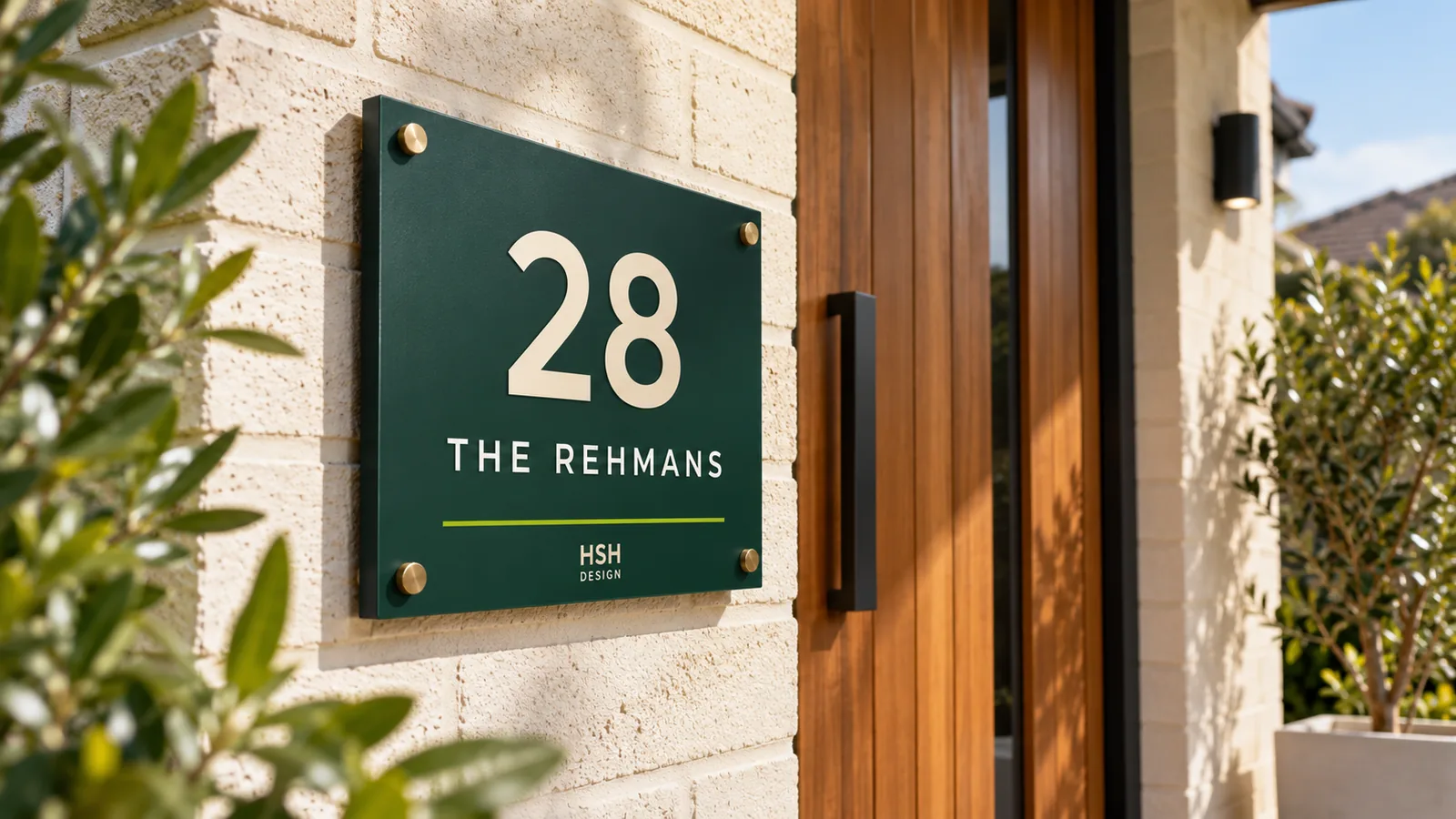


How big should house numbers be?
Size the digits for where people read them from, not for the wall. The working rule from sign sizes and viewing distance: about 25mm of height per 10 metres just to be legible, and three times that to read at a glance.
| Read from | Number height, comfortable | Typical spot |
|---|---|---|
| 3 metres | 25mm | An apartment or unit door |
| 10 metres | 75mm | A front door seen from the footpath |
| 25 metres | 190mm | A house set back, read from a car |
A driver slowing down to look for a number is reading from further away than a walker, so round up. A family name under the number can be smaller; the number is what people search for.
Making the number easy to read
- Contrast. Black or charcoal on white or a light wall, or white on a dark sign. Brushed metal on a pale render can vanish from across the road, so put the digits on a contrasting plate.
- A plain typeface. Thin scripts and fancy serifs look good up close and turn to squiggles at 10 metres. A 1 and a 7 should be impossible to confuse.
- Digits, not words. “Twenty-three” is harder to read at a glance than 23.
- Nothing in the way. Plants grow, and a screen door opened back can hide a number by the door.
Where to put the house number
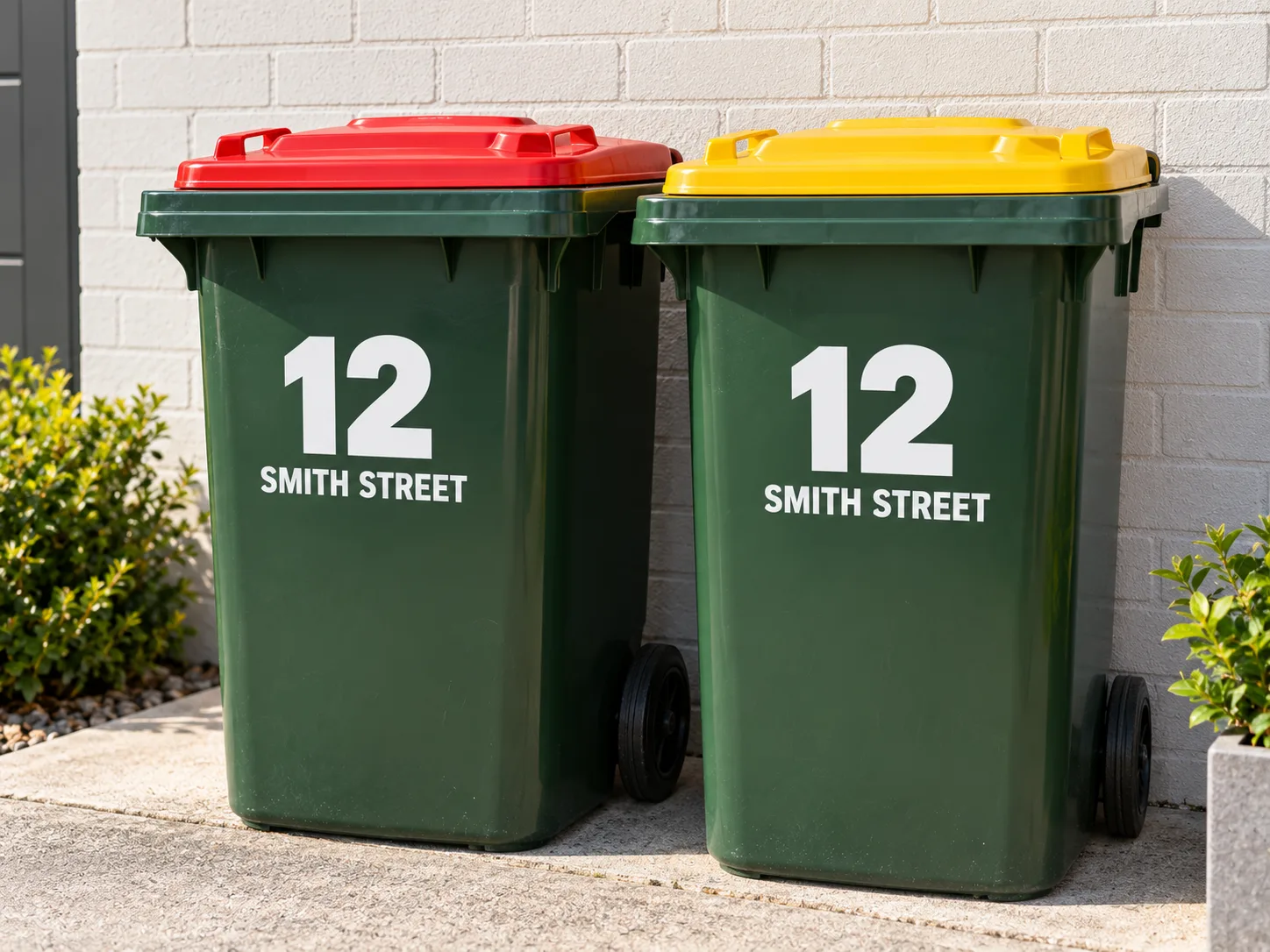
Where it can be seen from the street, at a height between waist and head, and near a light. Councils and emergency services ask that a property number be visible from the road, and a number that can only be seen once you are at the door does not help anyone find the door. If the house sits behind a fence, a hedge or a long driveway, put the number on the letterbox or the gate as well. Many people repeat it on the bins with wheelie bin stickers, which also stops the neighbours taking yours.
In rural areas the property’s address number often comes from the council, sometimes as a plate for the gate. A house or farm name sign goes beside it, not instead of it.
Fixing a house number sign
Screws for brick, render and timber; stand-offs for the floating look on a feature wall; strong double-sided tape for a smooth letterbox or a door. The fixings are matched to the surface you describe and come with the sign, ready to put up. Check strata or body corporate rules before drilling into a shared wall or fence.
How to order a house number sign
House number and house name signs are quoted per job, because the material, the size and whether it goes outside all change the price. Send the number and any name, roughly how big, where it goes (a photo helps) and which way it faces. You get a written price with GST and delivery included, and a proof before it is made. Start on the signs for the home page.
Common questions
What is the best material for a house number sign outside?
Metal is the lasting choice for a sign out in the sun and rain. Acrylic suits a porch or entry under cover, and vinyl numbers are a simple, low-cost option on a letterbox. Near the sea or in full afternoon sun, say so when you ask, so the material and finish suit the spot.
How big should house numbers be to be seen from the street?
At least 75mm high to be read comfortably from about 10 metres, which suits a front door seen from the footpath. For a house set well back, or read from a car, go to 150–200mm.
Where should a house number be placed?
Where it can be seen from the street, at about eye height, near a light, and clear of plants and doors. If the front door is hidden, put the number on the letterbox or gate too.
Can I have the family name on the house number sign?
Yes, a number with the family name beneath is one of the most common house signs. Keep the number the largest thing on the sign, since it is what visitors and couriers look for.
Do you install house number signs?
No. The sign arrives ready to put up, with fixings for the surface you tell us about.
How much does a house number sign cost?
It is quoted per job: the material, the size and whether it goes outside set the price. Send the number, any name, the size and where it goes for a written price with GST and delivery included.
Related
Last updated .