Guide · signage
Window signs for shops: which kind, and what to put on the glass
Shop window signs are vinyl applied to the glass, and they come in three kinds: cut lettering, frosted film and one-way perforated graphics. They are the cheapest sign a shop can have, they work at the distance customers actually stand, and they peel off cleanly when you move.
In one paragraph
Use cut vinyl lettering for your name, hours, phone and website, with the glass showing through. Use frosted film for privacy at eye height without losing daylight. Use one-way perforated film for a full-colour graphic that people outside see while you can still see out. Most window signs go on the inside of the glass, cut in reverse so they read from the street, and lettering and small panels are usually easy to apply yourself with soapy water.

The three kinds of window sign
Window decals, window stickers, window graphics and glass signage are names for the same thing: vinyl cut or printed for glass. What differs is the film, and each film does a different job.
| Cut vinyl lettering | Frosted film | One-way perforated | |
|---|---|---|---|
| Looks like | Sign-written letters, glass showing around them | Etched or sandblasted glass | A full-colour poster on the window |
| Best for | Name, logo, hours, phone, website | Privacy bands, offices, glass door markings | Big promotions and photos without blacking out the shop |
| See through it? | Yes, between the letters | Light passes, view does not | From inside, yes; from outside, you see the graphic |
| Price, for the same area | Lowest | Middle | Highest |
| Fit it yourself? | Usually yes | Small panels yes, large panes better fitted | Better fitted |
What we print for this
Proofed before they run
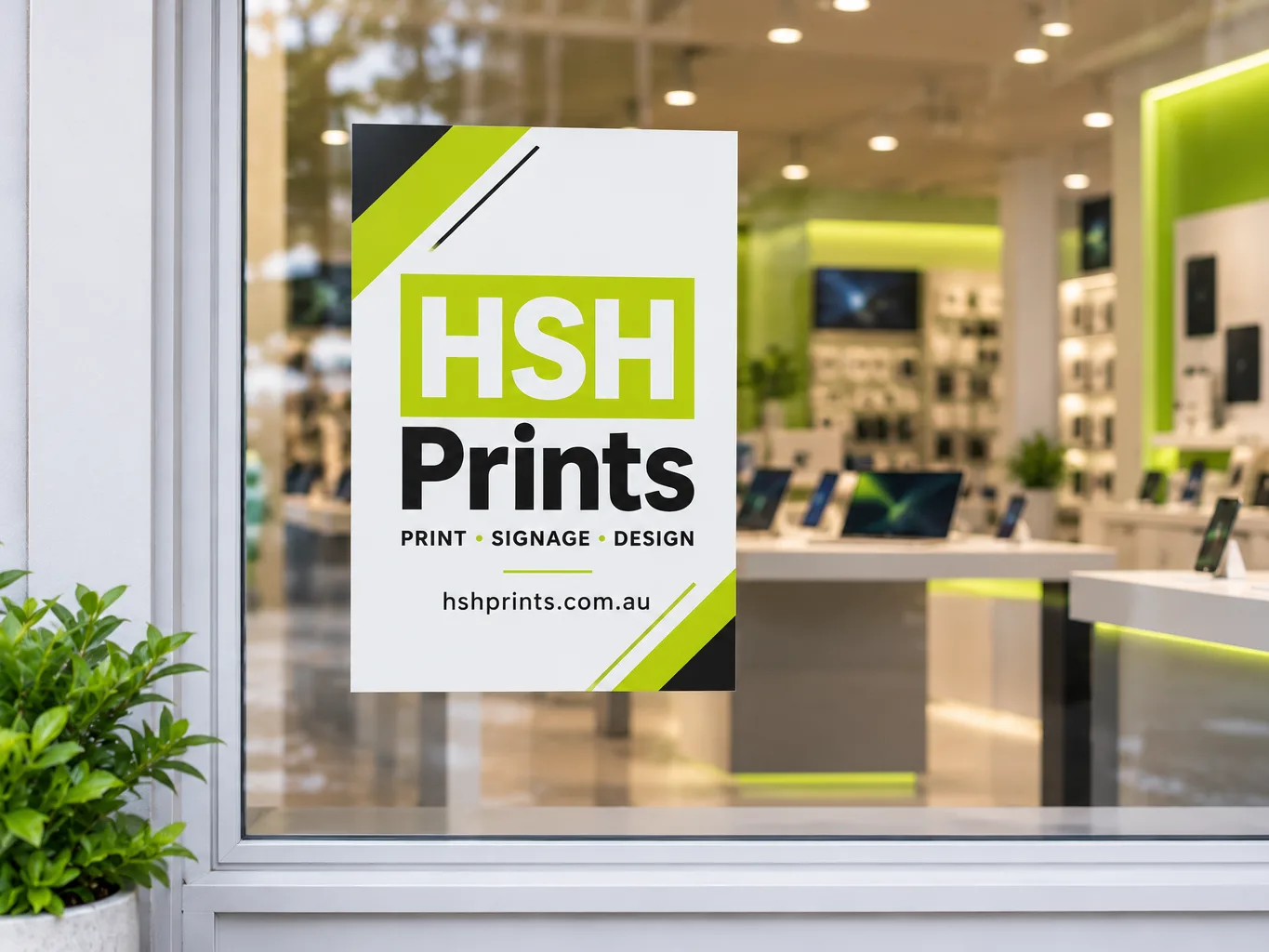
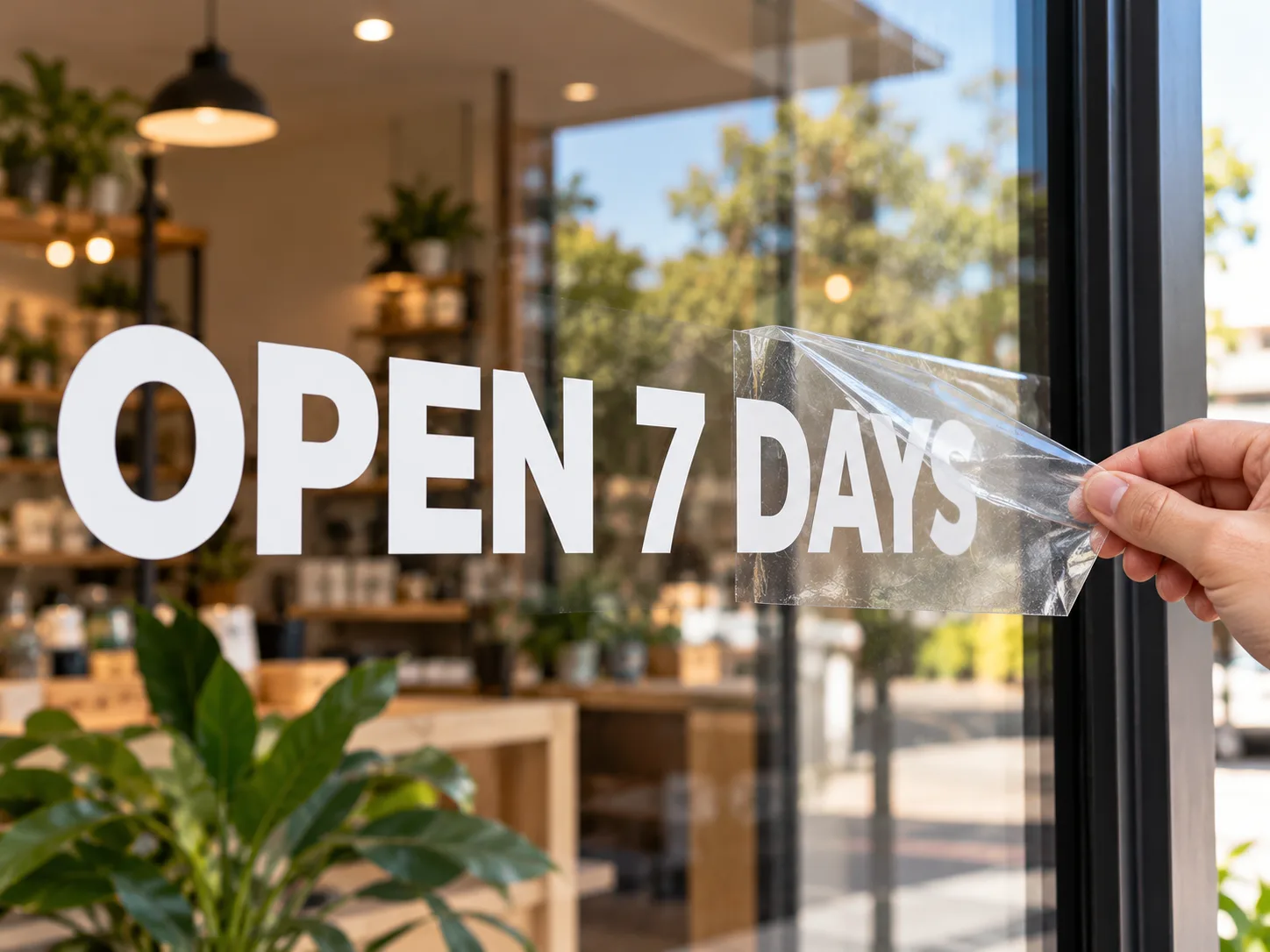
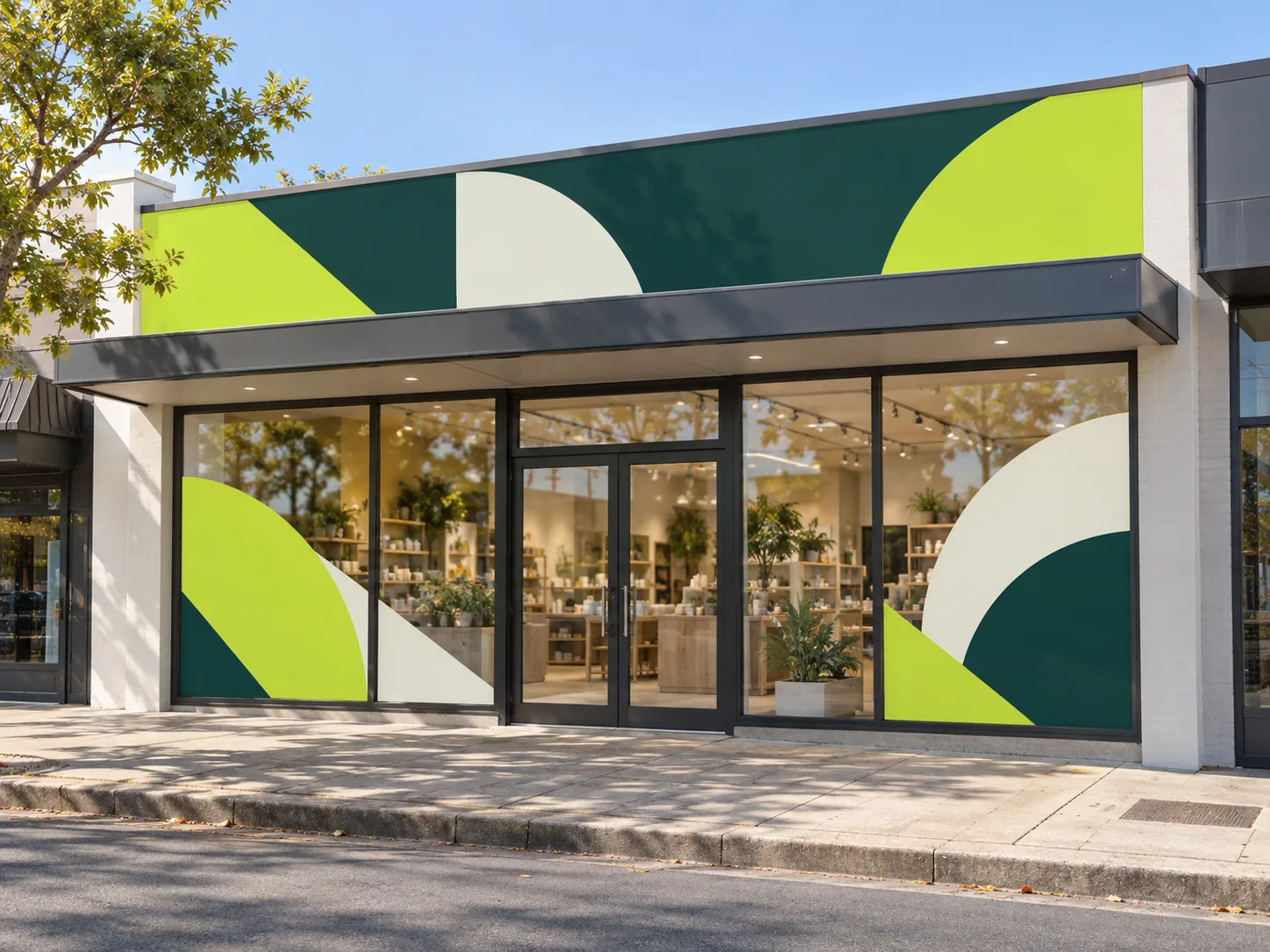
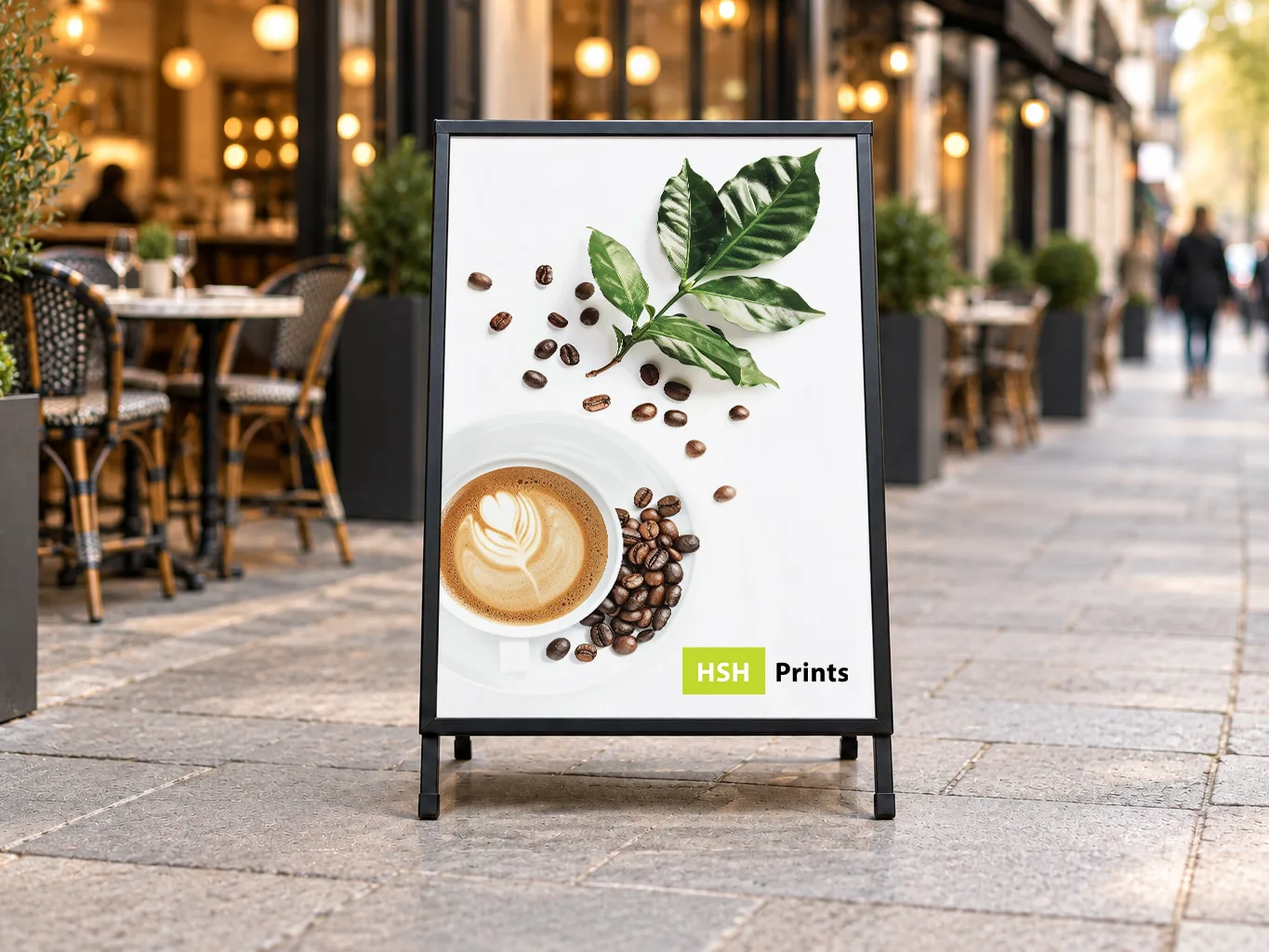
What to put on a shop window
The fascia above the shop is read from across the road. The window is read from the footpath, by someone deciding whether to walk in, so it does the close-up work:
- Your business name or logo, at eye height on the door
- Opening hours; the free opening hours sign maker lays them out, ready to print or cut as vinyl
- Phone number and website, large enough to read without walking up to the glass
- A QR code to your menu, bookings or reviews; keep it big enough to scan through glass (how big should a QR code be?)
- What you sell, in a few words, if your name does not say it
Leave clear glass. A window covered edge to edge stops people seeing in, and a shop nobody can see into is a shop fewer people walk into.
How big should the lettering be?
Size it for where people stand. Lettering on the door is read from a metre or two; the main name across the window may be read from the other side of the street. Sign sizes and viewing distance has letter heights for each distance. Keep strokes reasonably solid: a hairline serif or a 1mm stroke cuts badly and lifts first, so fine detail is better printed on clear film than cut.
Inside or outside the glass?
Inside, almost always. Film on the inside face is protected from weather, window cleaning and vandalism and lasts far longer. The catch is that artwork applied inside must be reverse-cut, mirrored so it reads correctly from the street. It is an easy thing to get wrong and an expensive one, which is what checking the proof is for. Outside application is for glass you cannot reach from inside, or where something is fixed against it.
Can you apply window signs yourself?
Usually, for lettering and small panels. The method that works:
- Clean the glass well, including the edges, and let it dry.
- Spray the glass lightly with water and a drop of detergent. Wet application lets the vinyl slide into place before it grabs; dry application on a big pane is how a first attempt becomes a second order.
- Position from one edge, then squeegee from the centre outward to push the water and bubbles out.
- Peel the application tape back slowly at a low angle, and leave it a day before cleaning over it.
Large panes and one-way perforated film are worth having fitted properly.
Glass doors and safety marking
Frosted or opaque film on a frameless glass door or a full-height pane is also a safety marking, so nobody walks into the glass. Some buildings and tenancies require one, and the requirement comes from the Australian Standard for glass in buildings, not from your sign maker. If you have been asked to add one, get the height and size from your building manager, glazier or certifier first; the film is then made to that specification.
Do window signs need council approval?
Often not. In NSW, window signs are one of the sign types that can be exempt development if they meet the conditions for their type, with the landowner’s written consent; Queensland councils set their own rules through the planning scheme. Illuminated window signs, heritage areas and very large window coverage are where approval tends to come in. See signage approval in NSW or in Queensland, and check your lease too: many landlords control what goes on the glass.
Do window decals damage the glass?
No. Vinyl peels from glass cleanly, and any adhesive left behind comes off with a solvent and a scraper made for glass. The only slow job is film left on a sun-facing pane for years past its life, where the peel gets fiddly.
How to order window signs
Window signs are quoted per job, because the film, the area of glass and the amount of cutting all change the price. Send a photo of the window from the footpath with the width and height of the pane, and say what it should say. You get a written price with GST and delivery included, and a proof showing the layout on your glass before anything is cut. Start on the window decals page. We deliver Australia-wide, with fitting available in NSW and QLD.
Common questions
What are shop window signs made of?
Self-adhesive vinyl made for glass: coloured vinyl cut into letters, frosted film, or printed one-way perforated film. All three peel off without damaging the glass.
What is the difference between frosted film and one-way vision film?
Frosted film obscures the view in both directions and keeps the daylight, which suits privacy at eye height. One-way perforated film carries a printed full-colour graphic that reads from outside while people inside can still see out, which suits a shopfront you do not want to black out.
Should window lettering go on the inside or outside?
Inside, in most cases, where it is protected from weather and cleaning. Inside lettering has to be cut in reverse so it reads correctly from the street, which your proof should show.
How long do window decals last?
Applied inside the glass, much longer than outside, because it is protected from rain, grit and cleaning. Outside-applied film is exposed to weather and cleaning and has a shorter life, and strong afternoon sun shortens it again.
How much do window signs cost?
They are quoted per job. Cut lettering is the cheapest film, then frosted, then one-way perforated, and the price scales with the area of glass and how detailed the cutting is. Send the pane size and a photo for a written price.
Can I put my opening hours on the shop window?
Yes, it is one of the most common window signs. Make the layout in the free opening hours sign maker, then have it printed on vinyl or cut as lettering to match the rest of your glass.
Related
Last updated .